
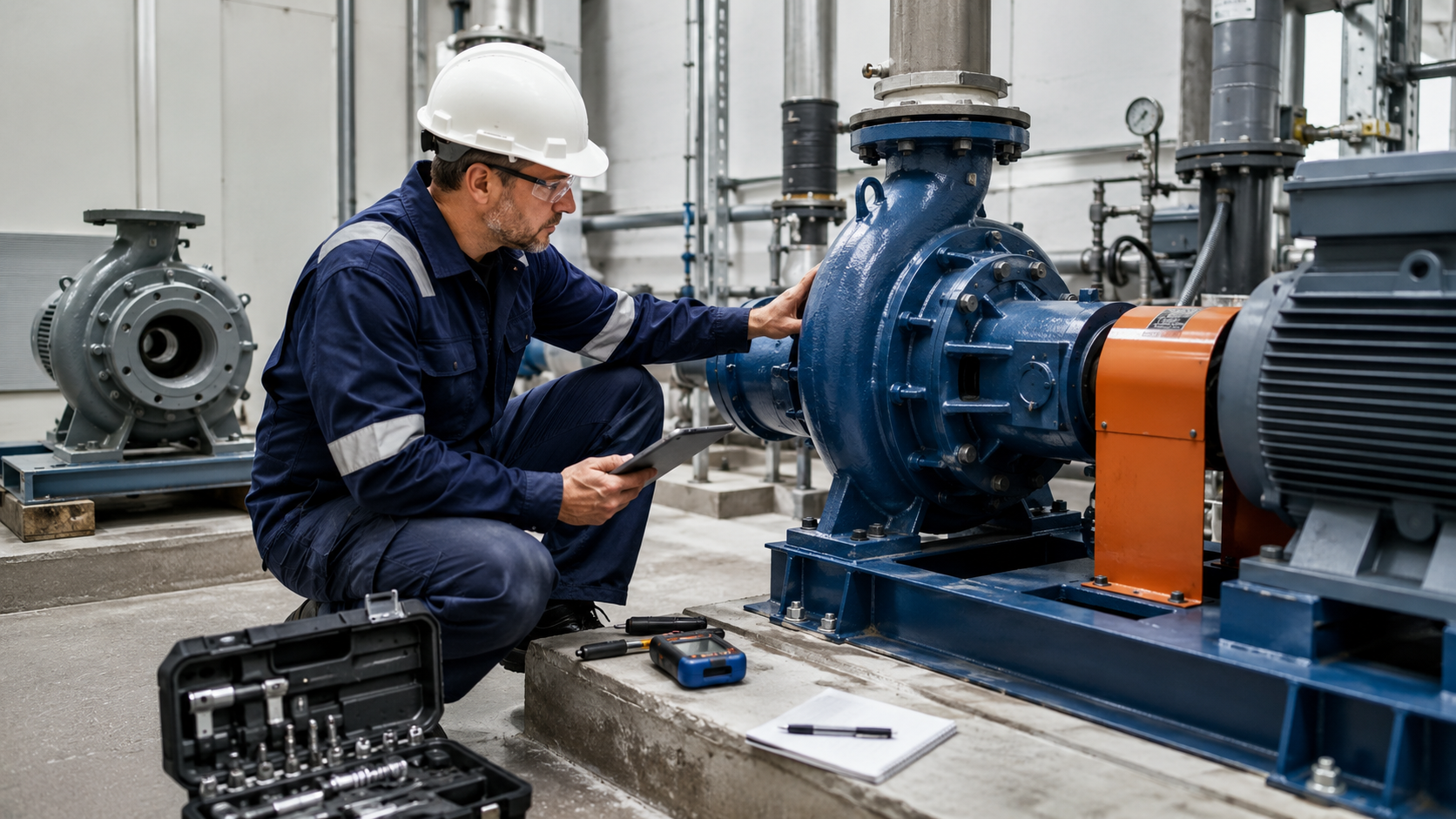
A failing water pump does not always need to be replaced. Many pumps can be rebuilt and returned to dependable service, especially when the main housing and other major components are still in good condition. In other cases, installing a new pump is the more practical decision because the existing unit has reached the end of its service life or no longer meets the system’s operating requirements.
The challenge is knowing which option makes sense before spending money on parts, labor, and downtime.
At San Diego Pump, Inc., we have spent more than 35 years working with pumping systems for industrial, municipal, agricultural, chemical, HVAC, marine, fire protection, and other demanding applications. We do not recommend rebuilding or replacing a pump based on age alone. We inspect the equipment, review how it has been operating, identify the cause of the problem, and consider how critical the pump is to the surrounding system.
That inspection gives customers a clearer answer than simply replacing the first damaged component.
What We Look for During a Pump Inspection
A pump inspection should identify the immediate failure and the conditions that caused it. Replacing a seal, bearing, or impeller without addressing the underlying problem may only lead to another shutdown.
Our evaluation may include the pump casing, shaft, bearings, seals, impeller, wear rings, motor, coupling, alignment, and other connected components. We also look for visible corrosion, erosion, cracking, overheating, leakage, and signs of cavitation.
The pump’s recent performance also matters. Reduced pressure, inconsistent flow, increased vibration, unusual sounds, frequent motor trips, and rising energy use can point to internal wear or a system-level problem.
Operational information helps complete the picture. We may need to know what fluid the pump handles, how often it runs, the required pressure and flow, the age of the equipment, previous repairs, and any recent process changes.
A pump may be repairable from a mechanical standpoint and still be a poor fit for the application. That is why the inspection should include both the equipment and the way it is being used.
When Rebuilding a Water Pump Is Worth Considering
A rebuild involves disassembling the pump, inspecting its internal components, replacing damaged or worn parts, and restoring the unit as closely as possible to its intended operating condition.
Rebuilding is often a strong option when the pump casing is structurally sound and the damage is concentrated in replaceable components.
Bearings, mechanical seals, bushings, gaskets, wear rings, shafts, and impellers are common service items. Their failure does not automatically mean the entire pump needs to be discarded.
Rebuilding may also make sense when the pump is part of a well-performing system. If the equipment has provided reliable pressure and flow for years, and the application has not changed, restoring the existing unit may be more practical than redesigning the system around a new model.
Availability is another important factor. Some industrial pumps have long replacement lead times, custom configurations, specialty materials, or application-specific connections. Rebuilding the existing unit may reduce the time a facility operates with limited capacity or temporary equipment.
A rebuild can also help preserve compatibility. A replacement pump may require changes to piping, controls, electrical connections, foundations, or mounting arrangements. Those additional costs should be considered before deciding that a new pump is the easier option.
When Replacing the Pump Makes More Sense
Replacement is usually the stronger choice when the damage extends beyond normal serviceable components.
A badly corroded, cracked, warped, or heavily eroded casing may not provide a dependable foundation for a rebuild. Major shaft damage, repeated impeller failures, or severe internal wear can also make restoration less practical.
Frequent breakdowns are another warning sign. A pump that has been repaired several times in a short period may have an unresolved system problem or may simply be nearing the end of its useful life. Continuing to rebuild it can create a cycle of repair costs and unexpected downtime.
Replacement may also be recommended when parts are obsolete or difficult to source. Older pumps sometimes rely on discontinued components, making each repair more expensive and less predictable.
Changes to the application can also influence the decision. A facility may need more flow, higher pressure, different materials, better chemical resistance, improved controls, or a pump designed for longer operating cycles. Rebuilding the old pump would restore its original capabilities, but those capabilities may no longer be enough.
An incorrectly sized pump should also be reviewed carefully. A pump that is too large or too small for the system may operate outside its preferred range. This can contribute to vibration, seal damage, cavitation, overheating, and premature wear. In that situation, replacing the unit with a properly selected pump may solve the underlying issue.
Rebuild Cost vs Replacement Cost
The quoted price is only one part of the decision.
A lower-cost rebuild may be the right choice when it provides several more years of reliable service. A higher-priced replacement may offer better value when it reduces repair frequency, improves system performance, or addresses an outdated design.
Customers should consider the full cost of each option, including:
- Parts and labor
- Removal and reinstallation
- Temporary bypass equipment
- Production interruptions
- Shipping and replacement lead times
- Required piping or electrical changes
- Future maintenance needs
- Expected operating life
- Availability of spare parts
- Risk of another unplanned shutdown
The importance of the pump also matters. A noncritical pump with a backup unit may allow more flexibility. A pump serving a lift station, fire system, production line, chemical process, or municipal application may require a more conservative approach because the consequences of failure are much greater.
Why the Cause of Failure Matters
A rebuild or replacement will not solve much if the original cause of failure remains in the system.
For example, a damaged impeller may be the result of abrasive material in the fluid. Failed bearings may be connected to poor alignment or excessive vibration. Repeated seal leaks may point to dry running, pressure problems, incompatible materials, or shaft movement.
Cavitation is another common concern. It can damage impellers and internal surfaces while producing noise, vibration, and reduced performance. Installing a new pump without correcting the suction conditions may expose the replacement unit to the same damage.
Our goal is to identify why the pump failed, not simply which part failed.
That distinction can prevent repeat repairs and give the customer a better understanding of what the system needs.
Warning Signs That Should Not Be Ignored
Pump problems often develop gradually before the equipment stops operating.
Common warning signs include:
- Unusual grinding, rattling, or whining sounds
- Excessive vibration
- Reduced pressure
- Lower flow rates
- Visible leakage
- Frequent seal failures
- Rising motor temperature
- Higher electrical demand
- Repeated overload trips
- Difficulty maintaining consistent operation
Scheduling an inspection early can increase the chance that the pump is still rebuildable. Continued operation after a bearing, seal, or alignment problem develops may cause damage to the shaft, impeller, casing, motor, and other components.
Our Recommendation After Inspection
There is no universal rule that says an older pump should be replaced or that rebuilding is always the less expensive choice. The right recommendation depends on the pump’s condition, the application, replacement availability, operating demands, and the consequences of another failure.
At San Diego Pump, Inc., we inspect the equipment and explain the practical options before recommending a course of action. When rebuilding offers dependable value, we will identify the components that need attention. When replacement is the stronger long-term decision, we will help determine the correct pump for the application.
Our team works with industrial pumps, municipal systems, booster systems, fire pumps, engine-driven pumps, ANSI pumps, chemical applications, agricultural systems, HVAC equipment, control systems, and other fluid-handling solutions.
If your pump is leaking, losing pressure, vibrating, overheating, or requiring frequent repairs, schedule an inspection before the damage spreads. A careful evaluation can help you avoid unnecessary replacement costs, reduce downtime, and choose a solution that supports reliable system performance.